Wednesday, September 23, 2009

Vehicle Technology
Research

maincurve image

The VTR Centre brings together research groups in four areas associated with vehicles, engines and fuels.
Sustainability, environmental concerns, user safety and comfort are the common factors for future designs, and intelligent assembly is part of future manufacturing.
The Centre is situated within the School of Mechanical Engineering.

Research Groups

  • Future Power Systems
    New technologies for super-clean and efficient combustion, new bio-fuels, fuel pre-treatment (hydrogen from fuel reforming) and exhaust aftertreatment, non-metallic gears and novel engines. Major projects with Jaguar-LandRover Research, Johnson Matthey, Shell Global Solutions UK and Deutz UK.
  • Railway System Engineering
    Should passengers have priority over freight? Is speed more important than reliability? What about capacity? Do countries need railways, and at what cost? How about the future?
  • Vehicle Dynamics
    Four poster whole vehicle ride testing rig, whole vehicle endurance testing, vehicle modal vibration response testing, vehicle suspension rig.
  • Automation and Intelligent Manufacturing (AIM)
    Flexible Automation and Robotics, Automotive and Aerospace Assembly Systems, Holonic Manufacturing Systems.

Henry Ford used to say that his customers could have any colour car they liked as long as it was black. Today the dominant hue is green

Vehicle Technology
Automotive Safety

Vehicle Technology
Formula SAE

Railway System Engineering

Vehicle Technology

Advanced Vehicle Technology Competitions for Students

Since 1987, the U.S. Department of Energy (DOE) has sponsored more than 45 advanced vehicle technology competitions through Argonne National Laboratory. These competitions represent a unique coalition of government, industry and academic partners who have joined forces to explore sustainable vehicle solutions. Argonne organizes and operates these competitions to

  • Accelerate the development and demonstration of technologies of interest to DOE and the automotive industry
  • Provide the automotive industry with a new generation of engineering leaders with highly desirable experience
  • Help prepare the market to accept advanced vehicle technologies.

Challenge X 2007 California Workshop
Challenge X teams and their vehicles at the grande finale, Washington, D.C., May 2008.
Mississippi State University's vehicle won first place in the competition.

Focusing on graduate and undergraduate engineering students, these competitions target ultra-efficient vehicle designs, hybrid electric vehicles, and alternative fuel vehicles for development, demonstration, and testing. They emphasize current or future vehicle technology; students work with production vehicles (donated by vehicle manufacturers) to improve their energy efficiency and to meet the toughest emissions standards while maintaining performance and functionality. Extensive data are collected to measure the real-world performance of advanced technologies and benchmark their developmental status.

The competitions represent a unique coalition of government and industry aimed at eliminating technical and institutional barriers to acceptance of advanced vehicle technologies and alternative fuels. The competitions are highly valued and supported by automotive manufacturers, suppliers, fuel providers, and the educational community. Auto industry experts judge events, interact with students, and compare technologies. Federal funding for the competitions is heavily leveraged by industry contributions.

Conducting competitions provides significant technical, educational, and promotional benefits to DOE and the nation. More than 16,000 students from more than 600 institutions from the United States, Canada, and Mexico have participated, gaining real-world, hands-on experience tackling the challenges associated with building more fuel-efficient vehicles.

The competitions continue to grow in sophistication and complexity. Both Ford and General Motors have made a commitment to long-term support for these competitions on the basis of their benefits in technology development and demonstration.

Military Vehicle Technology


The Military Vehicle Technology Foundation oversees one of the largest and most significant collections of historical military vehicles in the world. Our goal is to acquire, restore, and interpret the historical significance of 20th and 21st century military vehicles. Domestic and foreign combat vehicles such as tanks, armored cars, self-propelled artillery, and other technically interesting mobile platforms are the focus of the collection. We also maintain an extensive technical library that describes many vehicles down to the part level. Aside from the vehicles, there are towed artillery, antitank, and antiaircraft guns. Military support equipment, inert ordnance, and accessories round out the collection.

The MVTF website is currently undergoing intense modifications and updates. There are over 200 vehicles in the Foundation's collection, many of them exceedingly rare. The updated site will have greatly increased content and information on the collection, as well as information on how to book tours or arrange access for commercial purposes. The MVTF is recognized by the IRS as a 501(c) 3 corporation. Donations are considered fully tax-deductible as allowed by law.

General inquiries about the Military Vehicle Technology Foundation may be sent to:inquiries.mvtf@gmail.com

MVTF Museum
Visual Tour:
Military Vehicle Technology Foundatio


Tuesday, September 8, 2009

Vehicle

Automobiles are among the most commonly used engine-powered vehicles

A vehicle (Latin: vehiculum) is a mechanical means of conveyance, a carriage or transport. Most often they are manufactured (e.g. bicycles, cars, motorcycles, trains, ships,boats, and aircraft), although some other means of transportwhich are not made by humans also may be called vehicles; examples include icebergs and floating tree trunks.

Vehicles may be propelled or pulled by engines or animalsincluding humans, for instance, a chariot, a stagecoach, a mule-drawn barge, an ox-cart or rickshaw. However, animals on their own, though used as a means of transport, are not called vehicles, but rather beasts of burden or draft animals. This distinction includes humans carrying another human, for example a child or a disabled person. Means of transport without a vehicle or animal would include walking, running, crawling, or swimming.

Vehicles that do not travel on land often are called craft, such as watercraft, sailcraft, aircraft,hovercraft, and spacecraft

Land vehicles are classified broadly by what is used to apply steering and drive forces against the ground: wheeled, tracked, railed, or skied.

Types of vehicles

[edit]Bicycle

A pedal-powered quadracycleparked on a Canadian urban street amongst the cars
see Bicycles (see also Vehicular Cycling)
see main article History of the bicycle

[edit]Rickshaw

A rickshaw is a vehicle that may carry a human and be powered by a human, but it is the mechanical form or cart that is powered by the human that is labeled as the vehicle. For some human-powered vehicles the human providing the power is labeled as a driver.

[edit]Tricycle

see Tricycle

[edit]Quadracycle

see Quadracycle (human-powered vehicle)

[edit]Velomobile

see Velomobile

[edit]Electric road carriages

see electric vehicle
see history of the electric vehicle

[edit]Steam road carriage

see steam car

[edit]Steam tricycle

See steam tricycle

At the other end of the scale, much lighter steam vehicles have been constructed such as the steam tricycle from the Comte de Dion in 1887.

[edit]Petroleum (gasoline / diesel) motor-carriages

See Benz Patent Motorwagen
See Ford's model T
See Automobile

[edit]Road trains

A road train consists of a conventional heavy truck pulling three trailers or more, used in rural areas of Australia to move bulky loads such as livestock efficiently.

[edit]Motorcycles

See Motorcycle
See Gottlieb Daimler

[edit]Rail-vehicles

see Trains
see Trams

[edit]Road vehicles

see Cars
see Buses
see Trucks
see Vans

[edit]Water vehicles

see Boats
see Ships

[edit]Under-water vehicles

see submarines
see submersibles
see diving bells
see diving chambers

[edit]Land and water vehicles

see Amphibious vehicle
see Amphibious ATV
see Hovercraft

[edit]Air vehicles

see aircraft
see Wing-In-Ground effect vehicle

[edit]Rocket and space vehicles

see spacecraft
see rocket
see launch escape capsule
see ejection seat

[edit]Snow vehicles

see snowmobile

[edit]Other types of vehicles

A rickshaw is a vehicle that is powered by a human

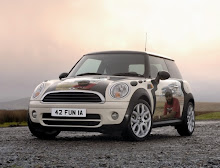
MINI CLUBMAN. by JMann2007
mmmmmm fast. by JMann2007
Too easy. by JMann2007
Stack on. by JMann2007
SAAB by JMann2007
Lamborghini by JMann2007
Jeep by JMann2007
350 Z by JMann2007
Hippie jeep. by JMann2007
It's a jeep thing. by JMann2007
Public by JMann2007
Old truck. by JMann2007
Dark and alone by JMann2007
Challenger by JMann2007
You want to drive. by JMann2007
Hot Rides. by JMann2007
 by JMann2007
 by JMann2007
Jeep Art. by JMann2007
Volt by JMann2007
GT 500 KR by JMann2007
SLR by JMann2007
JEEP by JMann2007
Altima by JMann2007
Old Ford BW. by JMann2007
 by JMann2007
350  Z by JMann2007
350 Z by JMann2007
The old 5-O by JMann2007
 by JMann2007
Old School by JMann2007
Motor Squad by JMann2007
Police by JMann2007
2010 Camaro by JMann2007